
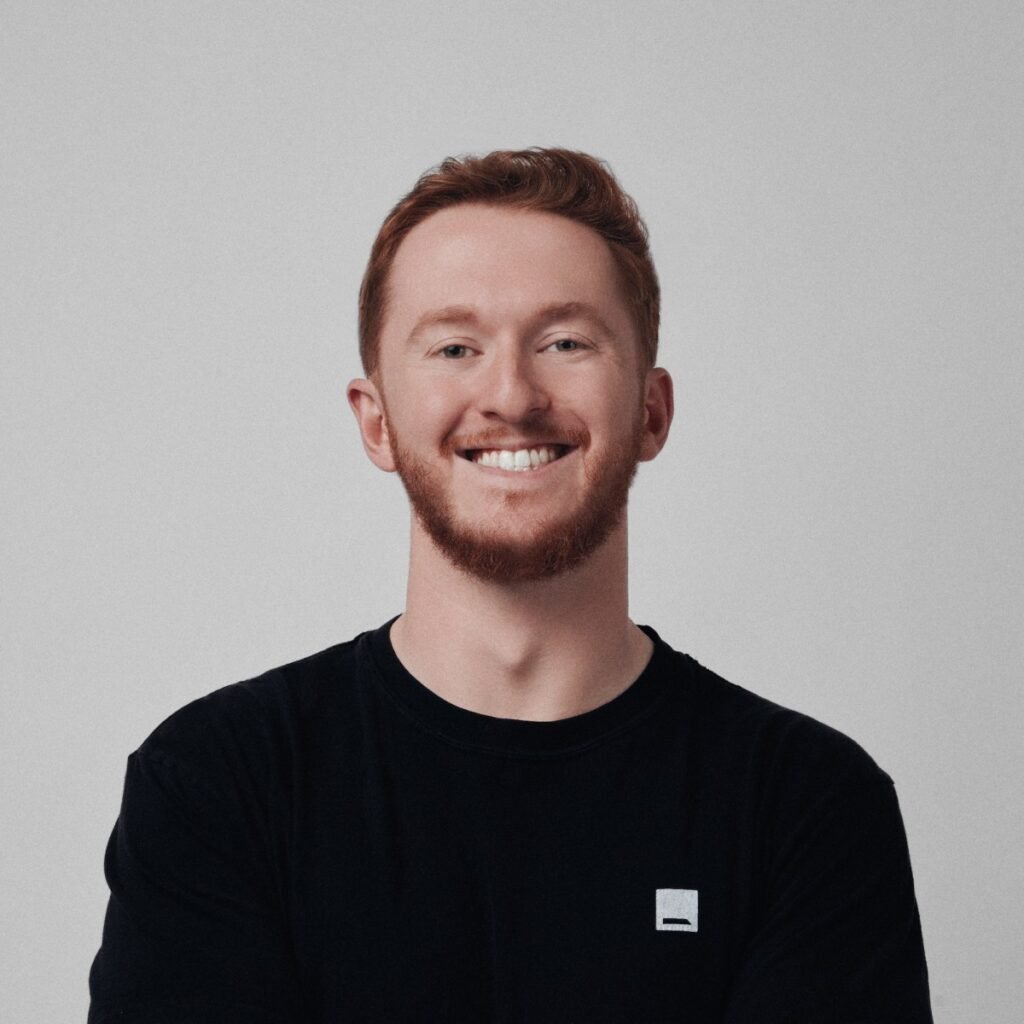



Etched, an AI chip startup founded in 2022 by three Harvard dropouts, has secured $300 million in a Series C funding round, pushing its valuation to a staggering $10.3 billion. Co-founder and COO Robert Wachen confirmed the milestone to TechCrunch, marking a rapid ascent for the company.
A Heavyweight Investor Roster
The funding round was led by Sequoia, with significant participation from Andreessen Horowitz, SK Hynix, Jane Street, and Diffusion Capital. The company’s cap table also features high-profile backers, including Peter Thiel, Andrej Karpathy, Dylan Field, and Amjad Masad.
This latest round represents a massive jump from the company’s $5 billion valuation just seven months ago. Etched claims this is the highest valuation ever recorded for a Sequoia-led Series C. The momentum follows last month’s announcement that the startup successfully manufactured its proprietary chips, with clients currently testing its first full systems and $1 billion in orders already secured.
Challenging the Industry Status Quo
When Etched launched, the concept of developing chips specifically for transformer-based AI models—the architecture powering ChatGPT and Claude—was frequently dismissed as impractical. The company continues to face skepticism regarding its strategy of selling full systems rather than standalone chips, with critics questioning if the hardware is limited to specific LLMs.
Wachen disputes these limitations. He explains that the systems are versatile, capable of running any AI model, including Mixture of Experts architectures like DeepSeek and Qwen, as well as non-transformer designs like Mamba, which utilizes a state-space model architecture. The industry is catching up to this specialized approach; Google is reportedly developing its own Frozen v2 chip for Gemini using a similar philosophy.
Innovation in Inference: Prefill and Decode
Etched’s competitive edge lies in two custom-designed components created to accelerate inference—the process that occurs after a prompt is submitted. “Inference is built in two stages: prefill and decode,” Wachen explains. While the prefill phase is compute-intensive and focused on understanding context, the decode phase requires massive memory to generate output tokens.
var playerInstance_jwplayer_6a79496a7411a = jwplayer( “jwplayer_6a79496a7411a” );
playerInstance_jwplayer_6a79496a7411a.setup({
playlist: “https://cdn.jwplayer.com/v2/media/po41mlAK”,
});
To optimize performance, Etched developed a prefill chip that operates at a significantly lower voltage than standard AI chips, reducing heat and allowing for a higher density of transistors. For the decode phase, the company introduced “cluster-scale memory,” an interconnect technology that enables multiple chips to share a memory pool with extremely low latency.
From Garage Beginnings to Massive Scale
The path to validation has been fraught with persistent skepticism. Early access was restricted to investors and select customers, who were convinced through private demos. Supporters include industry luminaries such as Anthropic’s Andrej Karpathy, OpenAI’s Noam Brown, and Geoffrey Hinton.
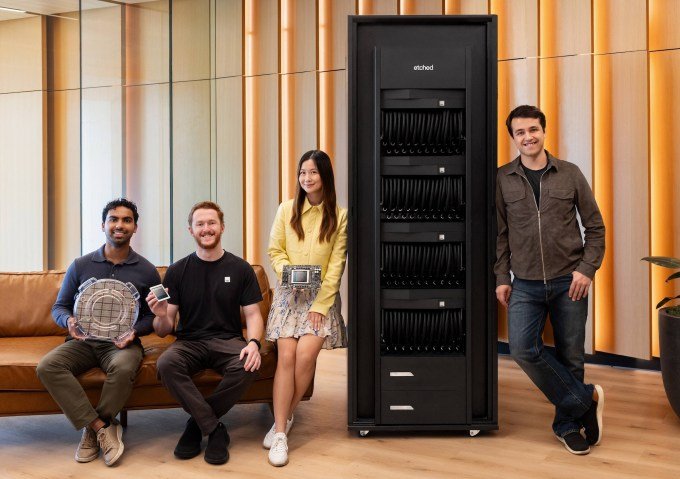
The founders—CEO Gavin Uberti, Wachen, and Chris Zhu—admit the journey from Harvard dropouts to hardware manufacturers was harder than anticipated. Early days involved running chip-design tools in a garage, where an employee’s wife was tasked with manually rebooting servers. Today, the company employs 400 people, operates a 2-megawatt data center, and has recently opened a new 80,000-square-foot, 10-megawatt facility in Milpitas.
“We’re running tokens in our lab today, working with some of the largest AI companies in the world,” Wachen says. Reflecting on the company’s trajectory, he emphasizes that persistence against the doubters has been key. “When you really think something is possible, and you just work at it for a long time, you can do it.”


Leave a Reply