



Apple is set for a major leadership transition as the tech giant navigates a complex landscape of AI competition, global trade tariffs, and supply-chain volatility. On Monday, the company announced that John Ternus will succeed Tim Cook as CEO later this year.
While Tim Cook famously scaled Apple into a $4 trillion global titan and revolutionized its services division, incoming CEO John Ternus represents a shift toward the company’s engineering roots. A veteran hardware executive, Ternus has spent his entire tenure at Apple—beginning in 2001—rising through the ranks of hardware engineering, playing a pivotal role in the development of the AirPods, Apple Watch, and Vision Pro.
Hardware with AI at the Center
Under Ternus, Apple is expected to pivot away from competing directly with massive AI model providers, focusing instead on integrating artificial intelligence into the physical devices that define the user experience. Whether through wearables, home devices, or mobile hardware, the strategy centers on AI-enhanced tools that connect directly to the iPhone, with Siri serving as the primary interface.
Speculation is mounting regarding the next generation of Apple products, with reports from Bloomberg suggesting the development of smart glasses, AI-equipped AirPods, and wearable pendants with integrated cameras.
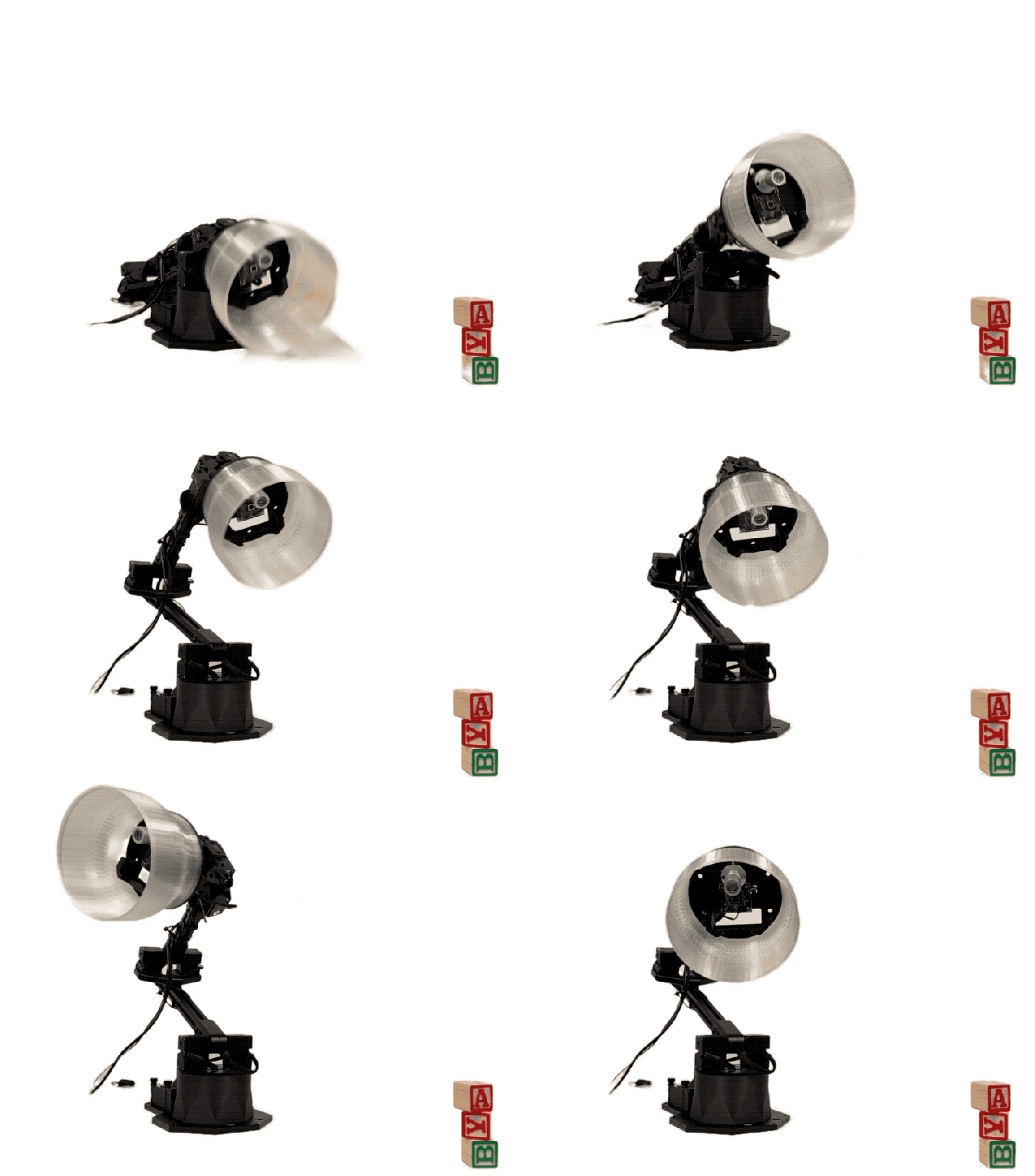
Ternus is also poised to accelerate projects that have long remained in development limbo. The foldable iPhone, a product highly anticipated by the market, is reportedly slated for a September launch under his oversight. Furthermore, Ternus is expected to champion robotics, a field where he has demonstrated personal interest since his college years, when he engineered a mechanical feeding arm for quadriplegics as noted by the New York Times.
Apple’s exploration of home robotics includes concepts ranging from tabletop displays with robotic arms to mobile robots designed for household assistance or mobile FaceTime communication. While humanoid robotics remains a long-term prospect, these initiatives underscore a strategic shift toward physical automation.
Despite these ambitions, the incoming CEO faces significant operational hurdles. Apple remains vulnerable to memory chip shortages and the unpredictable nature of U.S. tariff policies. Although the company has successfully diversified its manufacturing base—increasing production in India to approximately 25% of total iPhone output, according to Bloomberg—its heavy reliance on Chinese manufacturing remains a critical factor in the company’s future stability.



Leave a Reply