
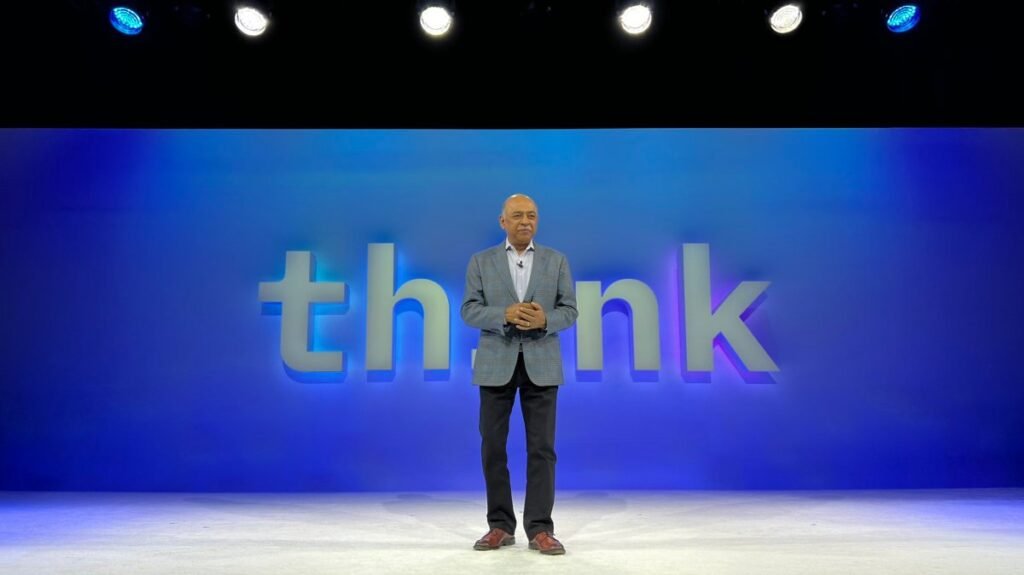



IBM faced a brutal reality check this Wednesday as the company reported quarterly earnings that fell significantly short of Wall Street expectations. Despite generating $17.2 billion in revenue, $9.9 billion in gross profit, and maintaining healthy 58% margins with $2.2 billion in net earnings, the results signaled a major stumble for the 115-year-old tech giant.
An Unprecedented Financial Warning
The miss was so severe that CEO Arvind Krishna and the board took the rare step of issuing a warning to investors ahead of the official report, admitting that performance was “worse than our expectations.” In a “letter to investors” released last week, the company projected abysmal revenue in its critical “infrastructure” segment and warned of shrinking profit margins. The market reaction was swift: IBM’s stock plummeted 25%, marking its biggest single-day decline ever. This drop abruptly halted the stock’s upward trajectory, which had previously thrived under Krishna’s six-year tenure thanks to the broader AI data center rally.
The Mainframe Business: A Cascading Failure
IBM has officially lowered its full-year growth forecasts, citing a massive 42% decline in its mainframe business—the company’s primary cash cow. This is particularly problematic for IBM’s ecosystem because, as CFO Jim Kavanaugh explained, every dollar of mainframe hardware sold typically generates an additional $3 in software revenue.
var playerInstance_jwplayer_6a794975b885b = jwplayer( “jwplayer_6a794975b885b” );
playerInstance_jwplayer_6a794975b885b.setup({
playlist: “https://cdn.jwplayer.com/v2/media/lv0GaEwB”,
});
During the investor call, leadership attributed the slump to a temporary disruption. They noted that “tens” of major clients opted to delay their mainframe upgrades this quarter. While the number of customers may seem small, the financial impact is massive: these systems cost hundreds of thousands to millions of dollars each, accompanied by lucrative long-term maintenance and software contracts.
The AI Paradox: When Hardware Costs Divert Budgets
Ironically, the same AI boom that propelled IBM’s growth has now become a source of instability. Krishna explained that clients were forced to prioritize their budgets elsewhere due to astronomical price hikes—ranging from 15% to 30%—on data center gear and PCs.
“When they were faced with that issue, they decided to move their budget to those areas where they were experiencing that extreme price pressure,” Krishna noted. This trend reflects a wider industry crisis; major hardware manufacturers like Dell, HP, and Apple have all confirmed that rising memory and component costs, driven by the aggressive AI infrastructure build-out, have forced them to raise prices.
Looking Ahead: Is the Mainframe Still Viable?
Despite the current turmoil, IBM’s leadership insists the mainframe remains central to enterprise IT. Krishna expressed confidence that these clients will eventually return to purchase their systems and software. According to the CEO, some orders have already materialized in the current quarter, and he maintains that there is “no evidence of clients moving off the mainframe.” While the tech world has prophesied the death of the mainframe for decades, IBM remains adamant that even the AI revolution won’t be its undoing.



Leave a Reply