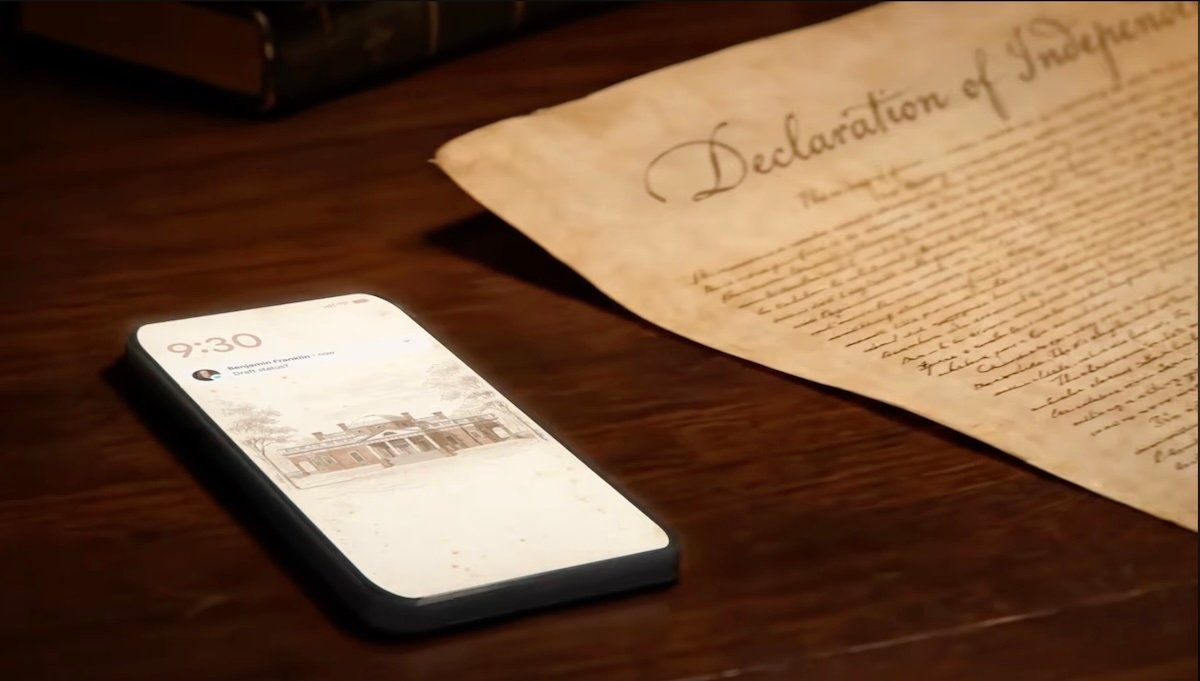
Google has launched a provocative new commercial that transports the American Founding Fathers into the digital age, exploring how the Declaration of Independence might have been drafted with the help of Google Workspace. Released 250 years after the historic signing, the ad titled “Group project, but make it 1776” offers a modern, tech-infused perspective on the birth of the United States. You can watch the full spot via this link.
Collaborating in the Continental Congress
The narrative centers on a fictionalized Thomas Jefferson struggling with his draft, only to be interrupted by a persistent text from Ben Franklin. The commercial showcases a seamless, albeit anachronistic, collaboration workflow: edits are proposed via Google Docs, meetings are coordinated through Google Calendar, and the team convenes on Google Meet—notably with every attendee keeping their camera off. The process concludes with digital signatures and a celebratory fireworks display.
The AI Integration
As expected from a 2026 tech campaign, artificial intelligence takes center stage. The founders leverage Google’s “help me visualize” tool to experiment with symbols for the national seal, while Gemini is utilized to summarize meeting notes. In a humorous highlight, the group consults the chatbot for advice before officially denying King George III’s request for document access.
A Subtle Approach to AI
The ad maintains a tongue-in-cheek tone—featuring Sam Adams suggesting they “settle this over beers”—and keeps its AI evangelism more discreet than previous campaigns. Unlike the controversial Google ad featuring a father using Gemini to draft a fan letter, this spot avoids suggesting that the Declaration’s actual text required AI intervention. However, the footage itself carries the distinct, uncanny aesthetic associated with AI-generated video.
Public Reception and Backlash
Reactions to the campaign have been polarized. While engagement on YouTube and Instagram remains largely positive, the response on Bluesky has been sharply critical. Critics have labeled the commercial “cringey” and “tone-deaf,” focusing their ire on the AI integration.
Historian Angus Johnston highlighted the irony of the campaign, noting how little of the actual historical process is represented by AI. “Even in a corny fantasy joke, it’s impossible to make the case that AI is a useful tool for political organizing, writing, or human collaboration,” Johnston stated.
About the Author