
South Korean startup LetinAR has secured $18.5 million in a new funding round led by the Korea Development Bank and Lotte Ventures. This capital injection, which brings the company’s total funding to $41.7 million, positions the firm to scale its proprietary optical technology ahead of a planned 2027 IPO, as the global race to dominate the AI glasses market intensifies.
The Tech Behind the Next Computing Platform
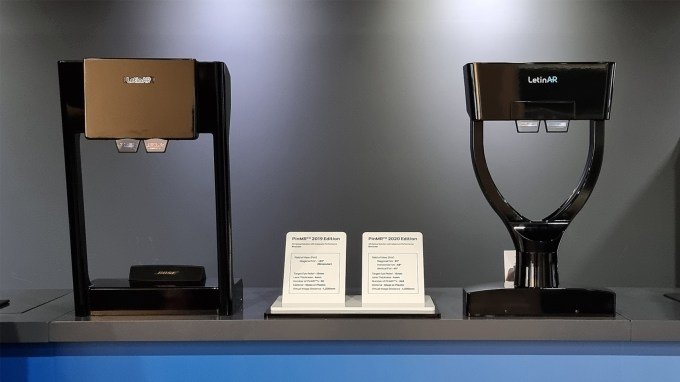
LetinAR does not manufacture the glasses themselves, but rather the essential optical modules that make them functional. According to CTO Jeonghun Ha, the primary engineering hurdle for the industry is creating a component thin and light enough for everyday wear while maintaining high image clarity and power efficiency. This is the core of LetinAR’s “PinTILT” technology.
While competitors often rely on waveguide displays—which can be inefficient and drain batteries—or bulky birdbath architectures, PinTILT offers a middle ground. By using tiny optical elements to direct light precisely into the user’s eye, the company claims it can produce brighter images using significantly less power.
Market Momentum
The demand for such technology is skyrocketing. With global AI glasses shipments reaching 8.7 million units in 2025—a 300% year-over-year increase—analysts expect this number to exceed 15 million in 2026, according to Omdia. Big Tech giants, including Meta, Google, Samsung, and Apple, are all aggressively moving into the space, with Samsung reportedly set to unveil AI glasses in London this July.
LetinAR is already seeing adoption in specialized sectors. Its modules are used by Japan’s NTT QONOQ Devices and Dynabook. Furthermore, the Swiss firm Aegis Rider has integrated LetinAR’s optics into a high-tech motorcycle helmet. This device projects navigation and safety alerts directly onto the road, providing a real-world example of how these optics can function outside of standard eyewear.
“We see AI glasses as the next platform,” CEO Jaehyeok Kim stated. As the industry shifts toward mass production, LetinAR aims to be the primary supplier for the hardware that will integrate AI into daily human interaction.
About the Author