
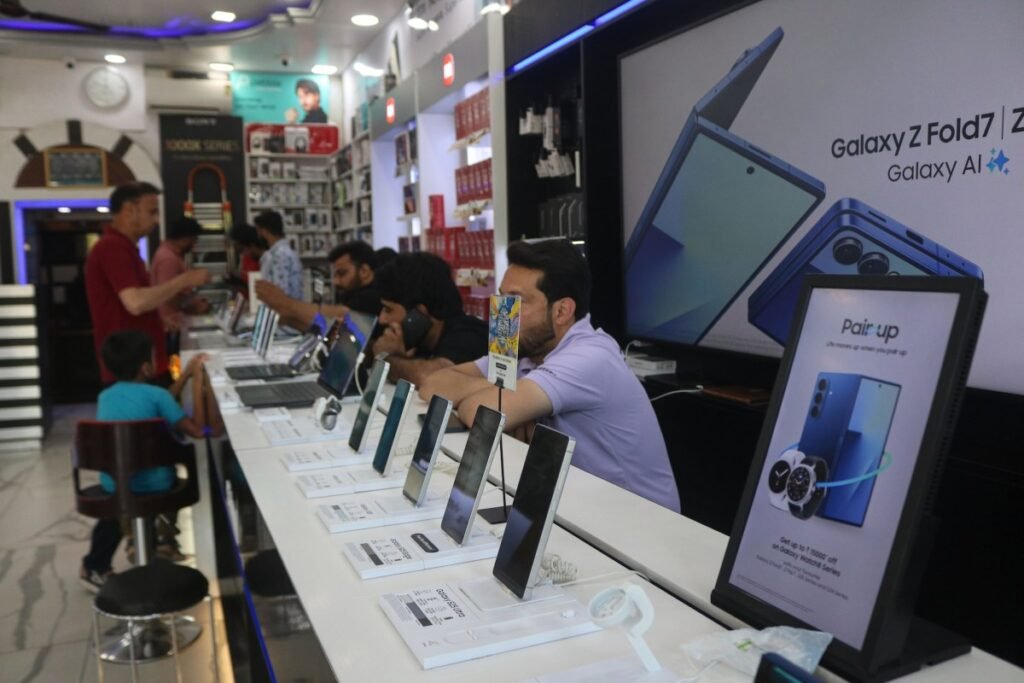



The global scramble for AI-ready memory chips is finally hitting consumer pockets, with India emerging as the primary casualty. As tech giants prioritize high-bandwidth memory for AI data centers, the resulting supply crunch is forcing up smartphone prices and triggering a significant contraction in the world’s second-largest handset market.
The AI Supply Chain Shift
The core of the issue lies in a production pivot by industry titans like Samsung, SK Hynix, and Micron. These manufacturers are reallocating capacity toward high-bandwidth memory (HBM)—the specialized chips essential for AI accelerators—because they offer vastly higher profit margins than standard RAM and storage modules used in mobile devices. This shift has created a scarcity of components for everyday electronics, driving costs upward for manufacturers and, ultimately, consumers.
India’s Market Contraction
According to data from Counterpoint Research, India experienced a 10% year-over-year decline in smartphone shipments during the April-June quarter. This represents the most severe June-quarter drop in six years. While China saw a more modest 2% decline, India’s sensitivity stems from its market composition: roughly 60% of sales occur in the sub-₹20,000 (under $210) segment, where component cost hikes are felt most acutely.
Tarun Pathak, vice president of research at Counterpoint, notes that while consumers are not abandoning mobile technology, they are significantly extending replacement cycles—shifting from 3.5 years to approximately four years. Premium brands like Apple and Samsung remain relatively shielded, but the broader market is feeling the strain.
Strategic Retreats and Market Realignment
The economic pressure is forcing brands to re-evaluate their global footprints. OnePlus, for instance, recently announced a halt to new product launches in Europe and North America to focus on more profitable regions. Counterpoint data reveals a sharp shift in OnePlus’s distribution strategy, with China’s share of their global shipments rising to 74% in Q1, while India’s share dropped to 19%.
This trend suggests a move toward consolidation. As Pathak explains, maintaining multiple sub-brands is only viable if volume covers shared infrastructure costs. With margins thinning, profitability is dictating market presence, leading to a “survival of the fittest” environment among budget-focused manufacturers.
Consumers Feel the Squeeze
Kiranjeet Kaur, associate research director at IDC, highlights that the Indian market is transitioning from “volume-led” to “value-led” growth. While fewer units are moving, the total revenue per device is climbing. Smartphone prices in India have surged between 4% and 68% depending on the model, pushing many buyers toward the secondhand market or forcing them to delay upgrades.
Financing has become a critical lifeline for affordability, yet the outlook remains challenging. IDC projects that memory shortages and elevated pricing will likely persist through at least the end of 2027. Compounding the situation, a weaker currency is making imports increasingly expensive, creating a “double whammy” for Indian consumers as manufacturers pass these inflationary pressures directly to the retail level.



Leave a Reply