YouTube is taking a more aggressive stance on artificial intelligence transparency by shifting from creator-led disclosure to automated enforcement. The platform announced on Wednesday that its internal systems will now automatically apply labels to any content featuring “significant photorealistic AI,” ensuring viewers are aware when they are watching synthetic media.
Stricter Enforcement of AI Transparency
While YouTube has required creators to disclose AI-generated content that mimics real people, places, or events for over two years, the burden of compliance previously rested entirely on the uploader. Under the updated policy, YouTube will leverage new internal signals to detect and label AI content independently. While creators are still encouraged to disclose their use of AI, the platform will now step in to apply these tags if the creator fails to do so.
This policy adjustment coincides with the broader release of Google’s Gemini Omni, a multimodal AI suite capable of producing highly realistic, physics-aware video content. Despite this more active role in policing, the company maintains that its core labeling requirements—which exempt fantastical or clearly animated scenarios, such as a unicorn in a fictional world—remain unchanged.
Enhanced Visibility for AI Labels
YouTube is also overhauling the design and placement of these disclosures to ensure they are impossible to miss. Previously, labels were often tucked away in the expanded description box, unless the video covered sensitive topics like news or health. Moving forward, labels will appear directly below the video player for long-form content and as an overlay on YouTube Shorts.
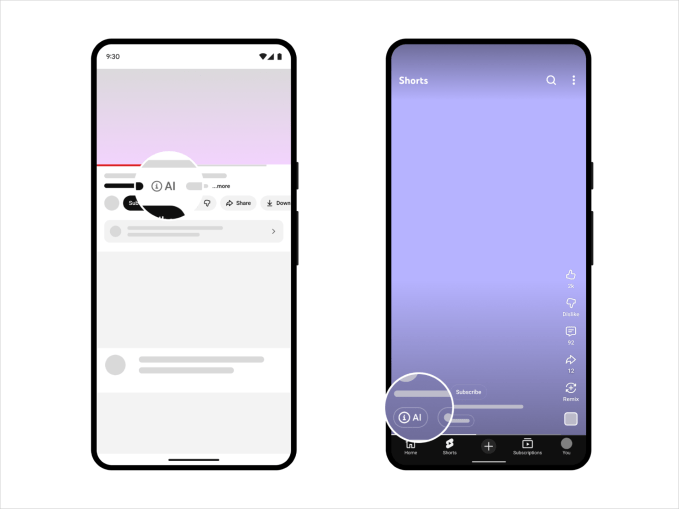
For content that is only slightly altered or animated, the label will remain in the expanded description. The company also confirmed that these labels do not influence search rankings or monetization eligibility.
Technical Standards and Creator Control
YouTube is also integrating C2PA metadata, which will result in permanent labels for content verified as fully AI-generated by industry standards. While creators can challenge misidentified content, they cannot remove labels from videos produced using YouTube’s own proprietary AI tools, such as Veo or Dream Screen.
This update follows the recent expansion of deepfake detection, which provides users with tools to scan for unauthorized face matches. As YouTube continues to integrate generative AI into features like “Ask YouTube” and playlist generation, the platform is doubling down on its commitment to distinguish synthetic content from reality.
About the Author