
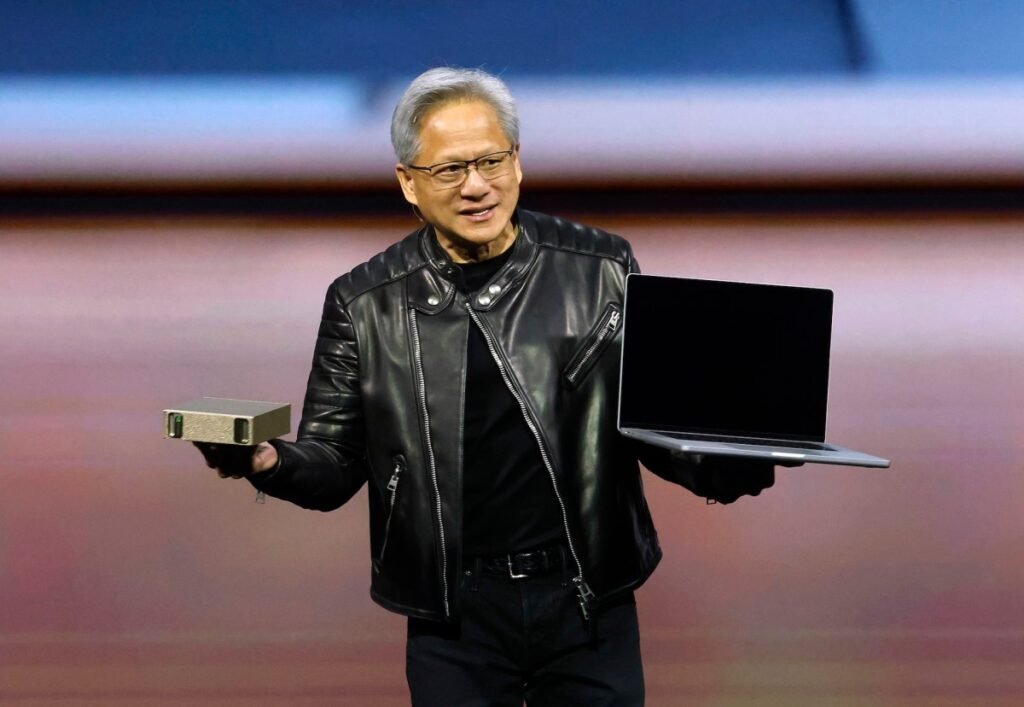


Nvidia is making a massive push into the $200 billion CPU market, unveiling a new 1-petaflop chip designed to power high-performance AI agent PCs. Launching this fall, these “RTX Spark” Windows devices from major partners including ASUS, Dell, HP, Lenovo, Microsoft, and MSI aim to revolutionize local AI computing by running sophisticated agents like OpenClaw and Hermes Agent in secure environments.
The Power of Localized AI Agents
Beyond raw speed, these PCs integrate secure sandboxes developed in partnership with Microsoft. The hardware—boasting advanced CPU, GPU, RAM, and Nvidia CUDA software—is specifically optimized to handle local versions of large language models, eliminating the need for constant cloud reliance.
Nvidia’s RTX technology is set to enhance performance, image quality, and AI-driven features across more than 1,000 games and applications. The chipmaker is positioning this platform as a premier tool for AI content creators while delivering a significant upgrade for its core gaming audience. Over 100 software developers, including Adobe, Blender, ComfyUI, Riot Games, and Xbox, have already pledged support for the new architecture.
Jensen Huang’s Vision for the Future of Computing
Nvidia CEO Jensen Huang views these devices as the death knell for traditional app-launching and manual computing. “With RTX Spark and Microsoft Windows, you ask — and the PC does the work,” Huang stated. “Frontier models. Creative workflows. RTX games. All on a laptop.”
var playerInstance_jwplayer_6a794c4fa8efd = jwplayer( “jwplayer_6a794c4fa8efd” );
playerInstance_jwplayer_6a794c4fa8efd.setup({
playlist: “https://cdn.jwplayer.com/v2/media/lv0GaEwB”,
});
Following a record-breaking financial quarter, Huang has shifted focus toward CPUs. He previously highlighted the success of the “Vera” server CPU, which has already generated $20 billion in sales. His long-term goal is clear: as billions of AI agents emerge to assist humans, the demand for powerful, agent-ready CPUs will skyrocket.
Learning from Past Failures
Nvidia’s journey into ARM-based Windows devices has a rocky history. In 2013, Microsoft famously took a $900 million write-off on the Nvidia-powered Surface RT, a product that saw partners like Dell quickly abandon ship. However, given Nvidia’s current market dominance and the sheer power of this new architecture, the landscape has shifted significantly.
Microsoft is already backing this vision, branding its flagship RTX Spark device as the “Surface Laptop Ultra” and calling it “the most powerful Surface Laptop ever built.”
Market Positioning and Future Outlook
While manufacturers remain tight-lipped on specific pricing, these systems appear to be consumer-grade iterations of the DGX Spark mini-computer, which currently retails for approximately $4,800. It remains to be seen whether these PCs will target the accessible price point of a Mac Mini or occupy the ultra-premium tier of the market.
Regardless of the price tag, if Nvidia has successfully cracked the code for bringing safe, efficient, and useful AI agents to the masses, the company is poised to redefine the personal computing landscape entirely.



Leave a Reply