




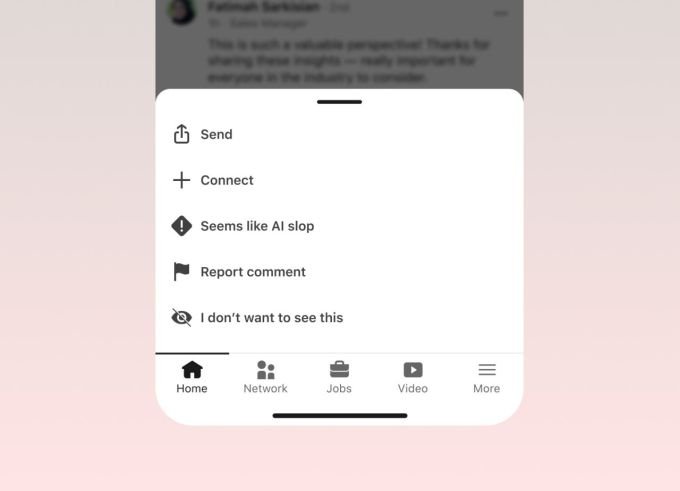
LinkedIn is officially cracking down on the wave of low-quality, AI-generated content—often dubbed “AI slop”—clogging its professional feed. On Thursday, the platform announced a new reporting feature that allows users to flag posts they suspect were generated by artificial intelligence, marking a significant step in the company’s effort to preserve the authenticity of its professional network.
A Growing Industry Crisis
This initiative arrives as online platforms scramble to purge inauthentic, machine-written content that has increasingly frustrated users. The struggle is industry-wide; just last week, Substack launched a tool to help readers identify AI-generated content through a partnership with Pangram. Meanwhile, the bot problem continues to escalate, even forcing startups like Digg to shut down their Reddit competitor earlier this year due to an unmanageable flood of automated traffic.
Data from internet infrastructure firm Cloudflare confirms the severity of the trend, noting that bot traffic has officially overtaken human-generated requests on the web—a milestone reached much faster than initial projections, as previously predicted.
LinkedIn’s Strategy to Restore Trust
In a recent post, LinkedIn’s Chief Product Officer, Hari Srinivasan, acknowledged that the Microsoft-owned platform is prioritizing the fight against AI-driven clutter. “People come to LinkedIn to connect with real people and share their real perspectives, ideas, and expertise,” Srinivasan stated.
The “Seems like AI slop” button is just one piece of a larger defense strategy. LinkedIn is currently leveraging automated defenses to block hundreds of thousands of spam attempts daily. Additionally, the company is deploying new classifiers designed to identify and suppress low-quality content in users’ feed recommendations. User reports from the new button will serve as critical data points to help refine these AI detection models.
Promoting Authentic Communication
Beyond suppression, LinkedIn is introducing transparency measures. The platform will now privately notify users via their dashboards if their content is perceived as inauthentic due to excessive AI usage. The goal is to encourage users to utilize AI as a collaborative tool—such as for proofreading—rather than a generator for low-effort posts.
Reflecting this shift, LinkedIn is retiring its “enhance your post” feature, which previously generated text for users. It is being replaced by a more conservative proofreading tool that focuses on grammar and style without altering the author’s unique voice. These updates, alongside expanded profile verification tools and enhanced comment-blocking controls, represent LinkedIn’s latest attempt to prioritize human-to-human engagement over automated output.




Leave a Reply