




Has Silicon Valley been building the wrong things?
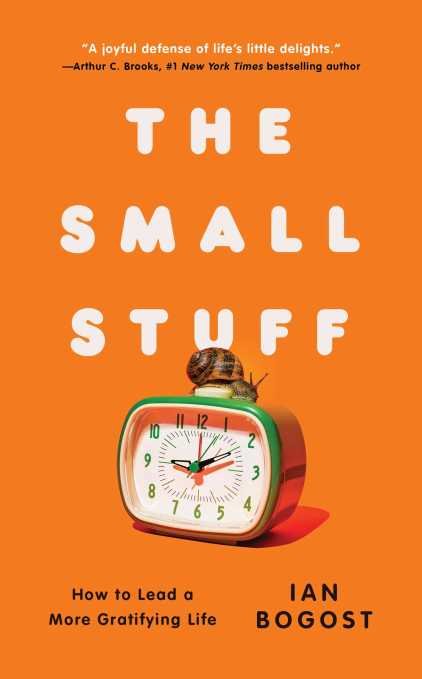
Despite its self-help-leaning title, writer, designer, and academic Ian Bogost’s upcoming book, “The Small Stuff: How to Lead a More Gratifying Life,” confronts the profound ways technology has reshaped our connection to the physical world. Drawing on his viral Atlantic article regarding the decline of manual transmission cars, Bogost argues that the texture of our daily lives—from how we drive to how we interact with basic infrastructure—is being systematically dematerialized.
The Hidden Cost of Convenience
“We’ve become disconnected from the sensory world, and the reason that happened is what you might call convenience technologies,” Bogost explained. However, he clarifies that technology is only part of the equation. A confluence of bureaucracy, efficiency-obsessed economics, and regulatory frameworks has distanced people from their own daily existence, stripping away the sensory “texture” of life.
Rather than joining the chorus of critics demanding massive societal or economic overhauls, Bogost suggests a more immediate approach. He argues that waiting for systemic change—like solving wealth inequality—is an unfair burden to place on individuals. Instead, he advocates for finding “gratification” in everyday sensory experiences right now.
From Stick Shifts to Sensory Meaning
Bogost’s journey toward this book began with his 2022 piece on the dying art of the manual transmission. As electric vehicles phase out traditional gearboxes, the cultural response to his article was overwhelming. He realized that the public’s attachment to stick shifts wasn’t just about cars; it was a symptom of a deeper hunger for tangible, meaningful interaction with the objects we use.
“I just find ordinary life very, very alluring, and I’ve never understood quite why,” Bogost said. “It was a realization, through the stick shift, that ordinary life is not just interesting, but deeply, deeply meaningful, and we have undervalued it.”
var playerInstance_jwplayer_6a794aac95e29 = jwplayer( “jwplayer_6a794aac95e29” );
playerInstance_jwplayer_6a794aac95e29.setup({
playlist: “https://cdn.jwplayer.com/v2/media/lv0GaEwB”,
});
What is Dematerialization?
Bogost defines “dematerialization” as the family of conditions that distance us from our sensory lives. He points to the automated airport restroom as a prime example: the toilet flushes, the sink runs, and the soap dispenses without the user lifting a finger. While these innovations provide undeniable utility, they represent a hidden tradeoff: we have traded our physical contact with the world for the sake of frictionless efficiency.
A Shift in Tech Critique
Unlike authors who focus on the “enshittification” of digital platforms, Bogost maintains that our lives have generally improved. He cautions against the “boiling frog” scenario, where we incrementally accept convenience at the cost of our agency. He notes that while he was an early critic of Silicon Valley’s influence, he has grown tired of constant, aggressive critiques that paint the tech industry as a binary of heroes and villains.
“I’m trying to toe this line between being honest about the fact that our lives are broadly speaking better, that this is not a Silicon Valley thing, actually, it’s much bigger than that,” he noted.
The Future of Product Design
Bogost challenges entrepreneurs and UX designers to look beyond mere automation. He argues that for decades, computing focused on human-factor engineering—designing tools that fit our physical reality—but that shifted in the 2000s toward a focus on pure outcomes. He believes that the “experience of doing” is just as vital as the final result.
“The experience of using products and services matters, not just the outcomes that they provide,” Bogost said. “If you talk about the experience of doing something with the bogeyman Silicon Valley-style entrepreneur, they’ll be like, ‘Why would you bother? We can automate that.’”
Moving Beyond Nostalgia
When asked if he is simply romanticizing the past, Bogost is firm: “We’re not going back.” He believes that nostalgia is only useful as a compass to orient us toward our current sensory lives. He also warns against the recent trend of intentionally adding “friction” to products, noting that the goal isn’t to make life difficult, but to ensure that we remain present in the actions we perform.
Ultimately, Bogost emphasizes that while we wait for industry leaders to prioritize human-centric design, individuals shouldn’t wait to reclaim their own lives. “There’s something they can do right now, in this moment, every day, rather than wring their hands or post obsessively on Facebook about how shitty everything is.”




Leave a Reply