



Digg is back from the dead. Again.
Just months after the reboot of Kevin Rose’s legendary link-sharing platform shut down in March, the company is changing course. After failing to establish itself as a viable competitor to Reddit—largely due to an influx of bot traffic and a lack of clear market differentiation—the startup laid off staff and returned to the drawing board. Rose, a partner at True Ventures, has been working full-time on a new iteration of Digg since April.
A Pivot Back to News Aggregation
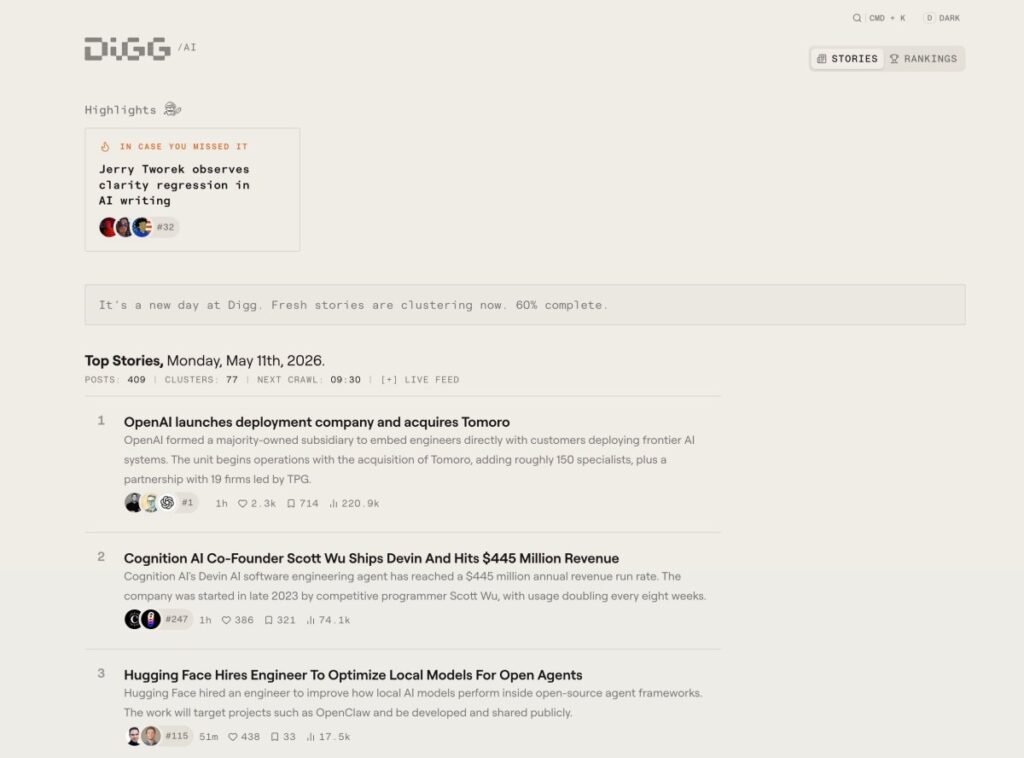
On Friday evening, founder Kevin Rose previewed the redesigned Digg. The platform has officially abandoned its Reddit-clone aspirations, returning to its roots as a news aggregator, beginning with a sharp focus on AI-related content.
a little project i’ve been hacking on: https://t.co/zTuwWy44ly
bugs expected. more topics soon.
— Kevin Rose (@kevinrose) May 8, 2026
In an email to beta testers, the company stated its mission is to “track the most influential voices in a space” and surface content truly worthy of attention. While AI is the current testing ground, the long-term goal is to expand into other verticals. The team notes the site is currently “raw” and “buggy,” serving as an early look rather than a formal public launch.
How the New Digg Works
The homepage features four primary segments: the most viewed story, rising discussions, fastest-climbing stories, and an “In case you missed it” headline. Below these, users find a ranked list of the day’s top stories, complete with engagement metrics such as views, likes, and saves.
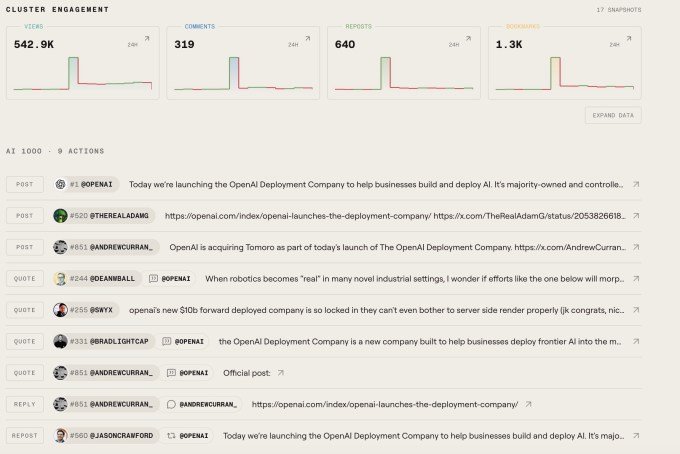
Unlike previous versions, these metrics are not generated internally. Digg is now ingesting content from X in real time, utilizing sentiment analysis, clustering, and signal detection to identify high-impact narratives. As Rose remarked on X, when a figure like OpenAI CEO Sam Altman engages with a topic, it triggers a chain reaction of discussion that the new Digg is specifically designed to track.
Data-Driven Insights vs. Utility
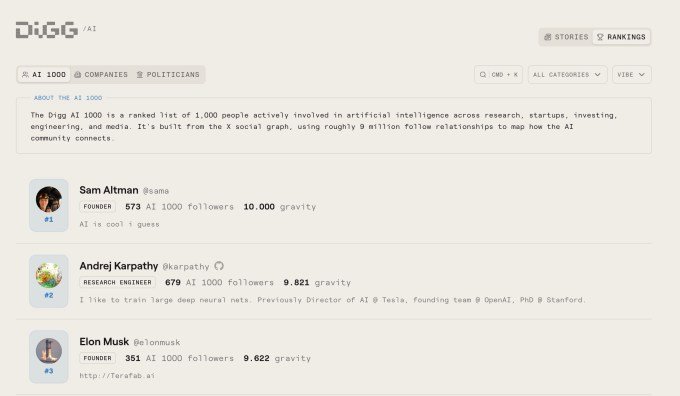
While the site offers value for data enthusiasts by visualizing the impact of engagement through charts and graphs, its utility for the average user remains to be seen. Beyond confirming that an @sama tweet can catalyze virality, the platform lacks a clear hook. It also provides rankings for the top 1,000 individuals, companies, and politicians currently shaping the AI landscape.
Challenges Ahead
Digg faces an uphill battle regarding user retention. Without native discussion features, it is unclear why users would choose it over existing news apps, RSS readers, or the “For You” feed on X. Furthermore, as the site moves beyond AI, it may struggle to maintain relevance. Much of the discourse once centralized on X has fragmented across competing platforms like Meta’s Threads, or moved entirely off the public web.
However, should Digg gain traction, it could provide a much-needed source of referral traffic for publishers. Many businesses have seen their traffic decline due to shifting search algorithms and the rise of AI Overviews, which often intercept user queries before they reach a destination website.

Leave a Reply