

As search engines become increasingly cluttered with AI-generated summaries and commercial noise, a growing movement is working to restore the human, serendipitous nature of the internet. Leading this charge is Wander Console, an open-source, self-hosted tool designed to help users explore the “small web” through curated recommendations from independent creators.
A Decentralized Approach to Discovery
Developed by London-based programmer Susam Pal, Wander was born out of a desire to move beyond the limitations of existing search tools. While services like Kagi’s “small web” search tool effectively filter for blogs and webcomics, they often miss the diverse ecosystem of indie projects, mini-apps, and personal experiments created by individual developers.
“Not everybody is aware of this beautiful portion of the internet, which is quirky, where we have all kinds of strange websites, where people are expressing their personality, and so on,” Pal noted.
Roots in Webrings and Nostalgia
Wander draws inspiration from the interconnected spirit of early internet webrings and the serendipitous discovery engine of StumbleUpon. By incorporating blogroll concepts, the tool allows site owners to manually curate and recommend their favorite “neighbor” sites, putting the power of discovery back into the hands of the community.
How to Set Up Your Wander Console
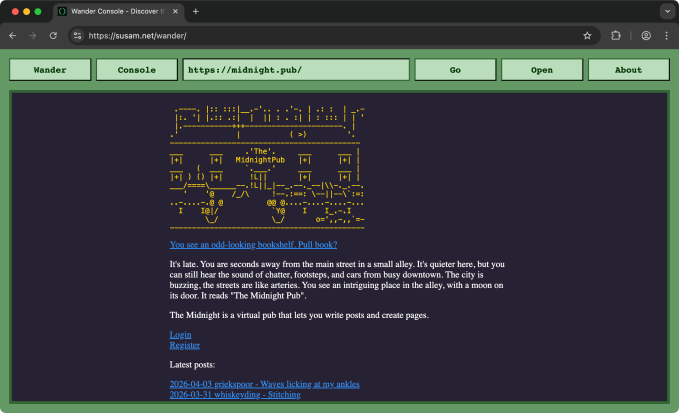
The technical barrier to entry is minimal. To implement Wander, users simply upload two files to their site: an index.html that serves as the console interface and a wander.js file used to link to other recommended consoles. Because it requires no server-side code or databases, it can be hosted easily on platforms like GitHub Pages or Codeberg Pages. You can explore a live example via Pal’s Wander Console demo.
Creativity and Customization
Once installed, users can click the “Wander” button to jump to a random neighbor site or explore the “Console” to view the host’s network. The platform encourages creativity, with developers customizing their consoles in unique ways: from thematically grouping sites to interactive cursors and Neocities-inspired layouts. Users have also experimented with varied color schemes and nostalgic aesthetics.
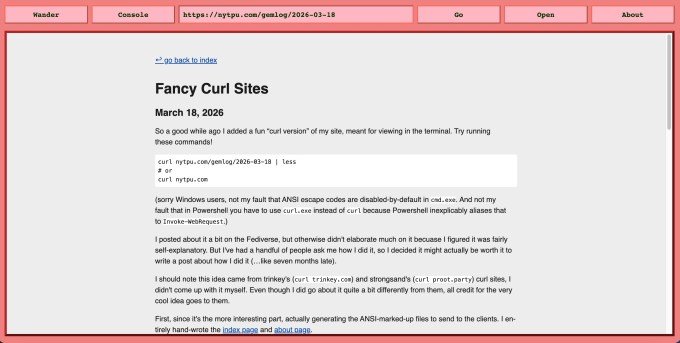
Customization is intentionally simple, allowing users to tweak CSS or JavaScript without breaking the base functionality. Pal encourages using AI tools to assist with these modifications, ensuring that updates to the core Wander project remain easy to integrate.
Growing Adoption
Since its introduction to communities like Hacker News, Reddit, and Lobsters, Wander has gained significant traction. Currently, over 60 people have adopted the tool to recommend more than 1,500 websites.
“I don’t think everybody needs to know about the small web — some people use the web as a utility, and I think it’s totally fine for them,” Pal said. “But people who are creative, they might want to know about the small web. It’s the element of surprise — you never know what you will find when you click the button.”
About the Author