
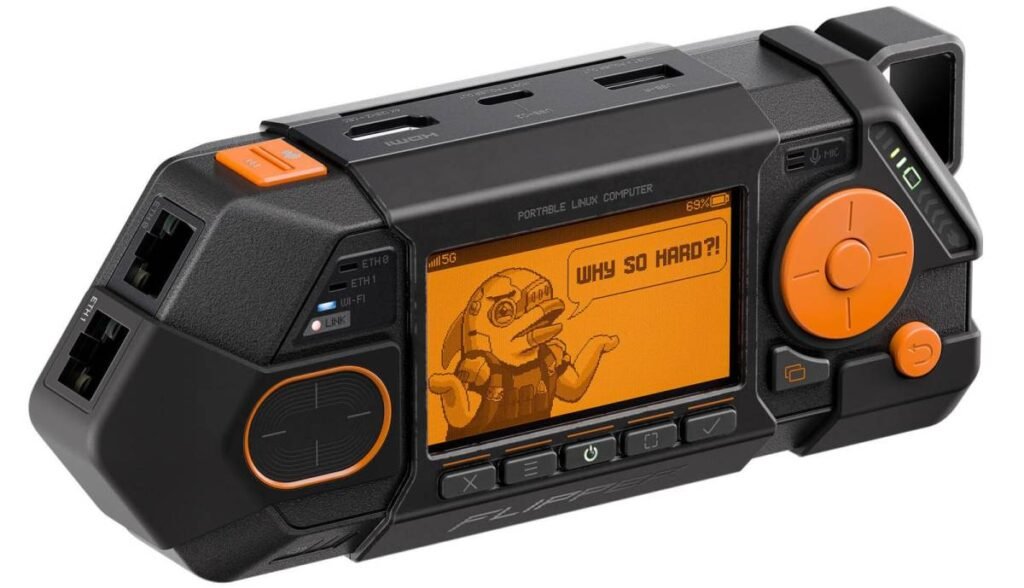



Flipper Devices, the powerhouse behind the iconic Flipper Zero, has officially unveiled the Flipper One. This new, Linux-based portable device is designed for advanced networking and tinkering, marking a significant evolution for the company that has already moved over one million units of its predecessor, generating more than $150 million in total sales. Despite its lineage, the Flipper One is not a direct successor to the Flipper Zero; it operates on a fundamentally different technological layer.
Beyond the Flipper Zero
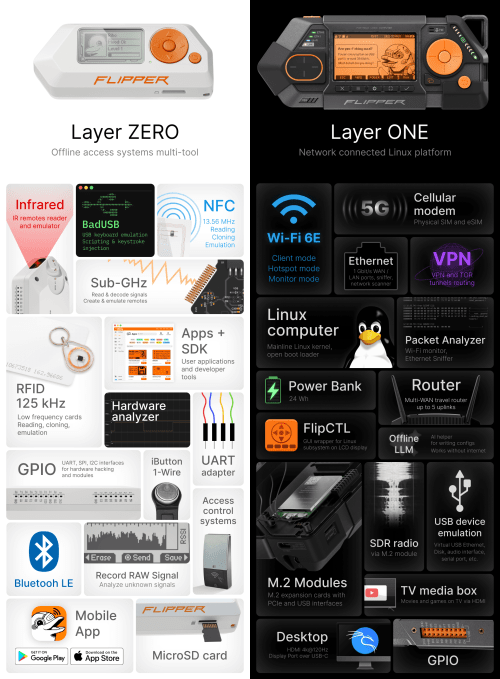
The original Flipper Zero became a staple in the hacker community due to its ability to interface with various radio protocols, including Bluetooth, RFID, NFC, sub-1GHz signals, and infrared. While the Zero excels at acting as a digital key fob or a tool for proximity-based testing, the Flipper One shifts the focus toward robust network connectivity and localized computing power.
Power and Connectivity Specs
The Flipper One is built for high-performance networking, featuring dual Gigabit Ethernet ports, USB Ethernet (5 Gbps), and Wi-Fi 6E (2.4/5/6 GHz) capabilities. A standout feature is its integrated M.2 port, which enables modular expansion. Users can connect a 5G modem, SDR modules, AI accelerators, or even NVMe/SATA SSDs via adapters. Currently in active development, the device will house an eight-core RK3576 processor, 8 GB of RAM, a Mali-G52 GPU, and a dedicated NPU for local AI tasks.
Software Innovation and Architecture
Collaboration with open-source firm Collabora ensures that the RK3576 chip supports the mainline Linux Kernel, allowing users to tinker with the device via official sources. Additionally, a secondary two-core Raspberry Pi RP2350 microcontroller manages low-level tasks like the display, inputs, and power subsystem, ensuring the device remains operational even when the primary Linux environment is powered down.
CEO Pavel Zhovner revealed that the company is building “Flipper OS” to solve the friction of constant SD card reflashing. This OS will support profiles with preconfigured settings, allowing users to experiment with software and revert to a clean state effortlessly. Furthermore, the team is developing “FlipCTL,” an interface designed for navigating device menus via D-pad and touch controls.
Versatility and Future Availability
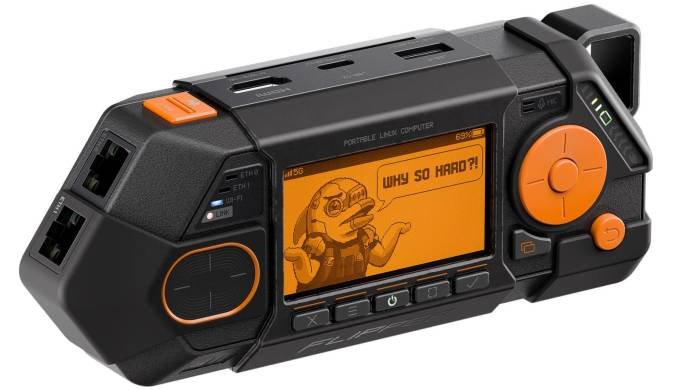
With its network drivers, the Flipper One can function as a router, VPN gateway, or bridge. By connecting a keyboard, mouse, and monitor via USB hub, it serves as a portable Linux desktop; its HDMI 2.1 port even supports 4K streaming at 120 Hz. The device’s NPU will allow for offline AI tasks, such as generating configurations without an internet connection.
While the hardware is ambitious, many software components—including NPU support and FlipperOS—are still in the concept phase. Flipper Devices is currently inviting developers to join the community to help build the final software ecosystem. Pricing details are pending, but the company anticipates a sub-$350 price point for the base model.



Leave a Reply