
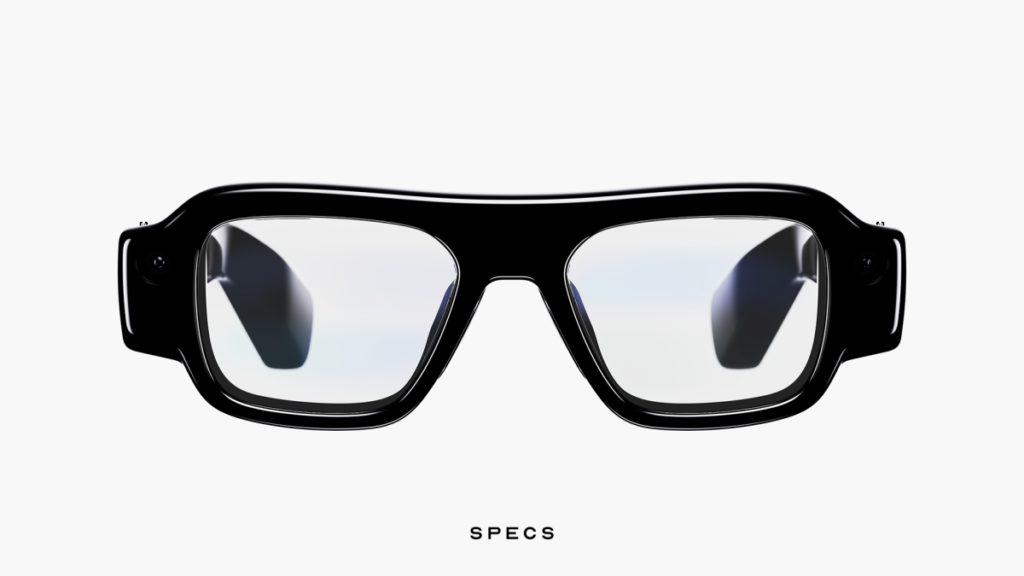


Snap officially unveiled its long-awaited consumer smart glasses, Specs, at a spatial AI convention in Long Beach this Tuesday. With a hefty price tag of $2,195, the device marks a major, albeit expensive, milestone for the company’s decade-long hardware journey.
Availability and Market Positioning
Preorders for the device open on June 16, requiring a $200 refundable deposit. Snap expects to ship the glasses this fall across the United States, the United Kingdom, and France. While the price point sits significantly higher than the $350 Meta Ray-Bans, it remains well below the $3,500 Apple Vision Pro. However, this premium cost effectively positions the device out of reach for the average consumer.
Hardware Design and Performance
Visually, the glasses resemble a bulkier, goggle-like version of standard eyewear. This design is intentional: Snap has opted for a standalone architecture, meaning all computing power is housed within the device, eliminating the need for external tethers or pucks. The hardware is driven by dual Snapdragon processors and offers four hours of continuous battery life, which can be extended to a total of 20 hours using the included charging case.
Functional Capabilities and AI Integration
What can users actually do with Specs? Beyond basic media consumption, the glasses feature interactive gaming, including shared multiplayer experiences. Snap has introduced a feature called “EyeConnect,” which initiates multiplayer sessions simply through eye contact between two wearers.
var playerInstance_jwplayer_6a794bf669bf9 = jwplayer( “jwplayer_6a794bf669bf9” );
playerInstance_jwplayer_6a794bf669bf9.setup({
playlist: “https://cdn.jwplayer.com/v2/media/lv0GaEwB”,
});
The display delivers a 51-degree field of view with 16 million colors. Users can capture point-of-view footage, browse the internet, access productivity applications, and manage emails. A standout feature is the contextual AI; by looking at an object and asking questions, the glasses provide real-time information, placing Snap directly into the competitive race for the ultimate AI-assistant interface.
Ergonomics and Privacy
Specs are available in two sizes: a 47 mm model weighing 132 grams and a 52 mm version weighing 136 grams. While these are significantly lighter than the Apple Vision Pro, they are noticeably heavier than Meta’s Ray-Ban series. To address privacy concerns, the device features a built-in LED light that activates during recording, and Snap claims users retain full control over data storage and syncing.
The Business Challenge Ahead
Early demos of previous iterations suggested the hardware could get hot and felt heavy during extended use, though Snap appears to have slimmed down the final version. The broader question remains whether this device can establish a viable business model. The smart glasses market is becoming increasingly crowded, with Meta leading in popularity and Google developing its own AI-powered eyewear.
Snap is currently targeting tech enthusiasts, developers, and studios, but the $2,200 entry fee requires a dedicated audience. The industry faces a persistent dilemma: consumer interest has yet to translate into the widespread enthusiasm necessary for consistent profitability. Even Meta continues to absorb significant losses in its AR division.
For Snap, the stakes are high. Following years of stock volatility, a decline in North American user engagement, and recent layoffs, the company struggles to reach consistent profitability. Whether Specs represents the next evolution in computing or another niche experiment remains to be seen.



Leave a Reply