




Meta officially launched “Muse Image” this Tuesday, a powerful generative AI tool integrated into its apps that allows users to create original content, edit photos, and generate custom advertisements. However, the feature has sparked immediate backlash regarding user privacy and consent.
The controversy centers on the fact that Muse Image can utilize photos from any public Instagram account. Unless a profile is set to private or belongs to a user under 18—who are automatically excluded—strangers can tag these accounts and incorporate their personal images into AI-generated creations without notification or explicit permission.
The Risks of Automated AI Manipulation
Privacy advocates are sounding the alarm over the potential for misuse. Because users are not alerted when their content is repurposed, the tool creates a significant opening for impersonation, harassment, and nonconsensual image editing. The lack of clear boundaries on how public data is leveraged by Meta’s AI has left many questioning the safety of their digital footprint.
If you want to opt out of this, here’s how you can do it.
How to opt out of Meta’s Muse Image generator
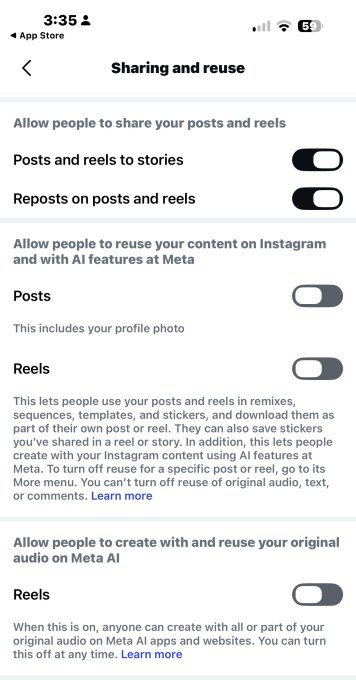
- Head to your profile and click the three horizontal lines in the top-right corner.
- Scroll down to “Sharing and reuse.”
- Look for the option that says, “Allow people to use your content on Instagram with AI features on Meta”
- Toggle the setting off for both posts and reels.
A Pattern of Privacy Concerns
The release of Muse Image arrives as social media platforms aggressively integrate generative AI, often outpacing the implementation of necessary transparency safeguards. Experts argue that users currently lack a fundamental understanding of how their personal data feeds these machine learning models.
Public skepticism remains high, with a Pew Research Center survey indicating that 35% of respondents feel more concerned than excited about the rapid expansion of AI. This apprehension is compounded by Meta’s history regarding data handling.
In 2019, the U.S. Federal Trade Commission (FTC) issued a $5 billion fine against Facebook. The penalty followed the Cambridge Analytica scandal, where the data of 87 million users was harvested without their explicit consent through third-party apps. That incident, which involved the unauthorized collection of information about users’ friends, continues to shape public distrust in Meta’s current AI-driven initiatives.




Leave a Reply